
Where Homeowners Spend Too Much — and Where Good Design Actually Pays Off
When homeowners begin a renovation or furnishing project, the concern is often that creating a beautiful home will require a larger budget. Most projects don’t run over because people choose luxury — they run over because decisions are made in the wrong order. Smart home design decisions will allow you to stay within your budget while achieving your dream home.
In my work with homeowners across London, I often see that many costly decisions are made before the foundational elements of a space have been fully considered.
Thoughtful design is not about spending more. It is about spending intentionally, in the areas that have the greatest impact on how your home looks, feels, functions, and holds up over time.
Understanding where budgets are commonly stretched — and where they are best protected — can make the entire process more efficient and ultimately more satisfying.
Where Budgets Quietly Disappear
One of the most common ways homeowners overspend is by making purchasing decisions before the foundational elements of the space have been resolved. Countless times I have seen homeowners here in London begin selecting finishes or furnishings early in the process, only to discover later that those choices do not support how the space needs to function.
Furniture is often selected before the layout is finalized, which can lead to pieces that are the wrong scale or do not function as intended. These items are then replaced or adjusted, resulting in duplicate spending that could have been avoided with earlier planning.
Trend-driven finishes are another area where costs can accumulate quickly. Materials chosen primarily for their current popularity may not align with the long-term use of the space, requiring updates sooner than expected.
There is also a tendency to purchase decorative elements early in the process, before the larger decisions around lighting, layout, and proportion are complete. While these items may seem minor individually, collectively they can divert budget away from the elements that truly shape the space.
Where Design Actually Makes the Greatest Difference
The areas that have the most lasting impact on a home are often the least visible at first glance.
Space planning is one of the most valuable investments in any project. A well-considered layout improves daily routines, reduces clutter, and ensures that each piece of furniture serves a purpose. When the flow of a space is resolved early, many other decisions become clearer and more efficient.
Lighting is another element that significantly influences how a home feels. Proper placement, scale, and layering of light sources affect not only aesthetics but also comfort and functionality. Adjustments made after construction or installation are far more costly than thoughtful planning from the outset.
Scale and proportion also determine whether a space feels balanced. Selecting appropriately sized furnishings and finishes prevents the need for replacements and ensures the room functions as intended.
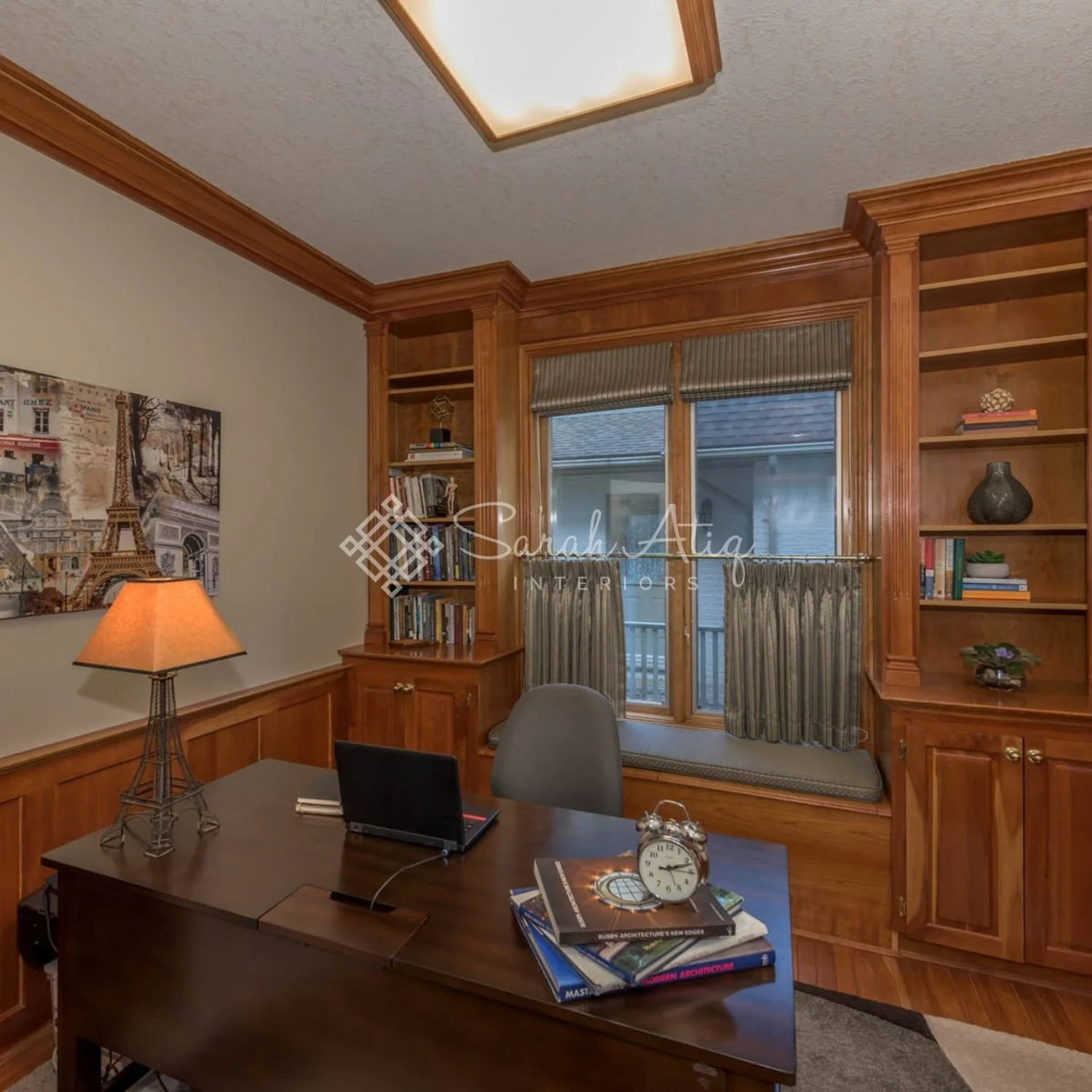
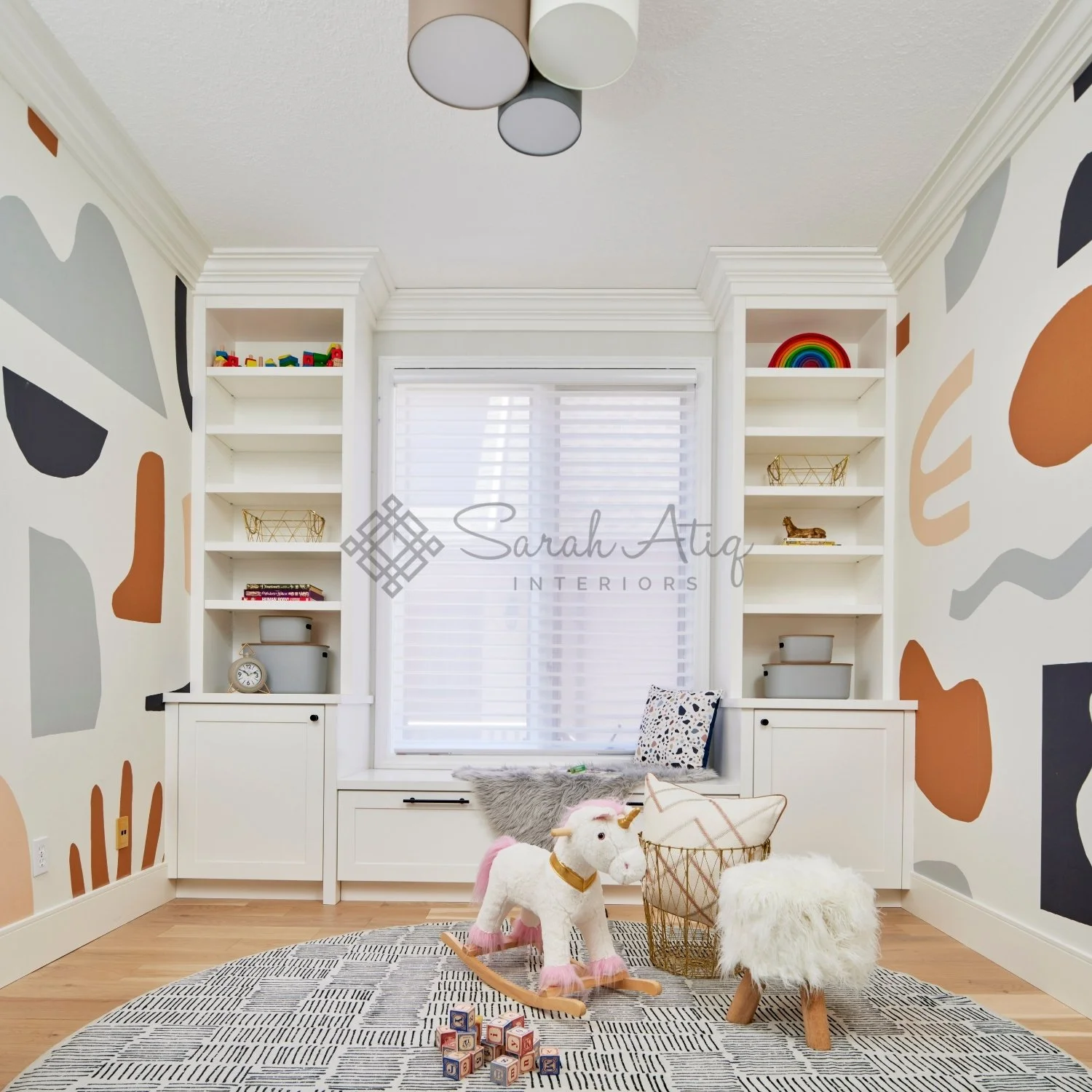
For example, in a recent Manchester Project, an existing home office was no longer needed once the new homeowners moved in with young children. Rather than simply adding storage or decorative elements, the space was re-planned entirely to function as a dedicated playroom. Dated wood panelling was removed, existing window coverings were replaced, and new lighting and flooring were introduced throughout the home so the transition between spaces felt cohesive. A durable wallpaper added personality while still standing up to daily use. At the same time, the original doors were intentionally retained as an ode to the home’s existing architecture. By focusing first on how the room needed to function, every subsequent decision became clearer — resulting in a space that now supports the family’s daily routines.
Finally, investing in durable materials in high-use areas — such as flooring, cabinetry, and frequently touched surfaces — provides long-term value. These are the elements that experience daily wear, and choosing quality here reduces the likelihood of premature updates.
The Value of Early Design Guidance
When design decisions are made in a structured and intentional way, the entire project becomes more efficient.
Early planning reduces the need for revisions, minimizes temporary purchases, and creates a cohesive direction that informs each subsequent choice. Rather than reacting to challenges as they arise, homeowners can move forward with confidence.
For homeowners who would like clarity before making selections, beginning with a design consultation can provide a clear and efficient starting point — helping establish priorities and prevent costly course corrections later.
Designing With Intention
A well-designed home is not necessarily the result of a larger budget. More often, it is the result of clear priorities and thoughtful decision-making.
By focusing investment on layout, lighting, proportion, and material quality — and by resisting the urge to purchase too quickly — homeowners can create spaces that feel both beautiful and functional for years to come.
Ultimately, successful design projects are rarely defined by how much is spent, but by how intentionally each decision is made. When priorities are clear and the sequence of decisions is thoughtfully considered, the result is a home that supports daily life with ease — and continues to serve its homeowners well, long after the project is complete.
If you are planning an upcoming renovation or furnishing project and would like clarity before making selections, a design consultation is often the most effective place to begin.

If you are planning an upcoming renovation or furnishing project and would like clarity before making selections, a design consultation is often the most effective place to begin.